Human Gene DNAL4 (ENST00000216068.9) from GENCODE V50
  Description: dynein axonemal light chain 4 (from RefSeq NM_005740.3)
Gencode Transcript: ENST00000216068.9
Gencode Gene: ENSG00000100246.15
Transcript (Including UTRs)
   Position: hg38 chr22:38,778,508-38,794,143 Size: 15,636 Total Exon Count: 4 Strand: -
Coding Region
   Position: hg38 chr22:38,779,449-38,782,731 Size: 3,283 Coding Exon Count: 3 

Page IndexSequence and LinksUniProtKB CommentsPrimersMalaCardsCTD
RNA-Seq ExpressionMicroarray ExpressionRNA StructureProtein StructureOther SpeciesGO Annotations
mRNA DescriptionsPathwaysOther NamesMethods
Data last updated at UCSC: 2026-07-12 09:30:09

-  Comments and Description Text from UniProtKB
  ID: DNAL4_HUMAN
DESCRIPTION: RecName: Full=Dynein light chain 4, axonemal;
FUNCTION: Force generating protein of respiratory cilia. Produces force towards the minus ends of microtubules. Dynein has ATPase activity (By similarity).
SUBUNIT: Consists of at least two heavy chains and a number of intermediate and light chains.
SUBCELLULAR LOCATION: Cytoplasm, cytoskeleton, cilium axoneme (By similarity).
SIMILARITY: Belongs to the dynein light chain family.

-  Primer design for this transcript
 

Primer3Plus can design qPCR Primers that straddle exon-exon-junctions, which amplify only cDNA, not genomic DNA.
Click here to load the transcript sequence and exon structure into Primer3Plus

Exonprimer can design one pair of Sanger sequencing primers around every exon, located in non-genic sequence.
Click here to open Exonprimer with this transcript

To design primers for a non-coding sequence, zoom to a region of interest and select from the drop-down menu: View > In External Tools > Primer3


-  MalaCards Disease Associations
  MalaCards Gene Search: DNAL4
Diseases sorted by gene-association score: mirror movements 3* (969), visceral heterotaxy (1)
* = Manually curated disease association

-  Comparative Toxicogenomics Database (CTD)
  The following chemicals interact with this gene

-  RNA-Seq Expression Data from GTEx (53 Tissues, 570 Donors)
  Highest median expression: 45.35 RPKM in Testis
Total median expression: 420.53 RPKM


View in GTEx track of Genome Browser    View at GTEx portal     View GTEx Body Map

+  Microarray Expression Data
 
Expression ratio colors:

GNF Expression Atlas 2 Data from U133A and GNF1H Chips


Ratios


Absolute


Ratios


Absolute


Ratios


Absolute

-  mRNA Secondary Structure of 3' and 5' UTRs
 
RegionFold EnergyBasesEnergy/Base
Display As
5' UTR -75.00215-0.349 Picture PostScript Text
3' UTR -372.30941-0.396 Picture PostScript Text

The RNAfold program from the Vienna RNA Package is used to perform the secondary structure predictions and folding calculations. The estimated folding energy is in kcal/mol. The more negative the energy, the more secondary structure the RNA is likely to have.

-  Protein Domain and Structure Information
  InterPro Domains: Graphical view of domain structure
IPR001372 - Dynein_light_chain_typ-1/2

Pfam Domains:
PF01221 - Dynein light chain type 1

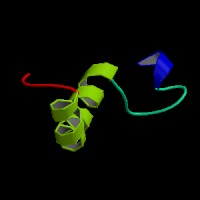
ModBase Predicted Comparative 3D Structure on O96015
FrontTopSide
The pictures above may be empty if there is no ModBase structure for the protein. The ModBase structure frequently covers just a fragment of the protein. You may be asked to log onto ModBase the first time you click on the pictures. It is simplest after logging in to just click on the picture again to get to the specific info on that model.

-  Orthologous Genes in Other Species
  Orthologies between human, mouse, and rat are computed by taking the best BLASTP hit, and filtering out non-syntenic hits. For more distant species reciprocal-best BLASTP hits are used. Note that the absence of an ortholog in the table below may reflect incomplete annotations in the other species rather than a true absence of the orthologous gene.
MouseRatZebrafishD. melanogasterC. elegansS. cerevisiae
Genome BrowserGenome BrowserNo orthologNo orthologNo orthologNo ortholog
Gene Details     
Gene Sorter     
MGIRGD    
Protein SequenceProtein Sequence    
AlignmentAlignment    

-  Gene Ontology (GO) Annotations with Structured Vocabulary
  Molecular Function:
GO:0003774 motor activity
GO:0003777 microtubule motor activity
GO:0005515 protein binding
GO:0008092 cytoskeletal protein binding
GO:0045505 dynein intermediate chain binding
GO:0051959 dynein light intermediate chain binding
GO:0008574 ATP-dependent microtubule motor activity, plus-end-directed

Biological Process:
GO:0007017 microtubule-based process
GO:0007018 microtubule-based movement
GO:2000582 positive regulation of ATP-dependent microtubule motor activity, plus-end-directed

Cellular Component:
GO:0005737 cytoplasm
GO:0005856 cytoskeleton
GO:0005874 microtubule
GO:0005886 plasma membrane
GO:0005929 cilium
GO:0030286 dynein complex
GO:0042995 cell projection


-  Descriptions from all associated GenBank mRNAs
  LF210371 - JP 2014500723-A/17874: Polycomb-Associated Non-Coding RNAs.
MA445948 - JP 2018138019-A/17874: Polycomb-Associated Non-Coding RNAs.
AK289744 - Homo sapiens cDNA FLJ75032 complete cds, highly similar to Homo sapiens unc-84 homolog B (C. elegans) (UNC84B), mRNA.
BC002968 - Homo sapiens dynein, axonemal, light chain 4, mRNA (cDNA clone MGC:1838 IMAGE:3543962), complete cds.
AL035366 - H.sapiens novel gene, similar to mouse Dynein light chain AB010031.
JD425530 - Sequence 406554 from Patent EP1572962.
JD051219 - Sequence 32243 from Patent EP1572962.
JD454308 - Sequence 435332 from Patent EP1572962.
JD077433 - Sequence 58457 from Patent EP1572962.
JD384329 - Sequence 365353 from Patent EP1572962.
JD218532 - Sequence 199556 from Patent EP1572962.
JD187367 - Sequence 168391 from Patent EP1572962.
JD117361 - Sequence 98385 from Patent EP1572962.
JD383472 - Sequence 364496 from Patent EP1572962.
JD168730 - Sequence 149754 from Patent EP1572962.
JD528970 - Sequence 509994 from Patent EP1572962.
JD326873 - Sequence 307897 from Patent EP1572962.
JD393987 - Sequence 375011 from Patent EP1572962.
JD481874 - Sequence 462898 from Patent EP1572962.
JD437380 - Sequence 418404 from Patent EP1572962.
JD111503 - Sequence 92527 from Patent EP1572962.
DQ585147 - Homo sapiens piRNA piR-52259, complete sequence.
JD128356 - Sequence 109380 from Patent EP1572962.
JD144463 - Sequence 125487 from Patent EP1572962.
JD264031 - Sequence 245055 from Patent EP1572962.
JD235613 - Sequence 216637 from Patent EP1572962.
JD232160 - Sequence 213184 from Patent EP1572962.
CR456487 - Homo sapiens DNAL4 full length open reading frame (ORF) cDNA clone (cDNA clone C22ORF:pGEM.DNAL4).
AK223349 - Homo sapiens mRNA for dynein light chain 4, axonemal variant, clone: TST05617.
JD177016 - Sequence 158040 from Patent EP1572962.
AK290566 - Homo sapiens cDNA FLJ76544 complete cds, highly similar to Homo sapiens dynein, axonemal, light polypeptide 4 (DNAL4), mRNA.
JD324621 - Sequence 305645 from Patent EP1572962.
JD396508 - Sequence 377532 from Patent EP1572962.
AY453399 - Homo sapiens proliferation-inducing protein 27 (PIG27) mRNA, complete cds.
CU013047 - Homo sapiens DNAL4, mRNA (cDNA clone IMAGE:100000305), complete cds, with stop codon, in Gateway system.
CR542177 - Homo sapiens full open reading frame cDNA clone RZPDo834D1024D for gene DNAL4, dynein, axonemal, light polypeptide 4; complete cds, incl. stopcodon.
KJ898162 - Synthetic construct Homo sapiens clone ccsbBroadEn_07556 DNAL4 gene, encodes complete protein.
BT009847 - Homo sapiens dynein, axonemal, light polypeptide 4 mRNA, complete cds.
CR542195 - Homo sapiens full open reading frame cDNA clone RZPDo834G0824D for gene DNAL4, dynein, axonemal, light polypeptide 4; complete cds, without stopcodon.
CU013335 - Homo sapiens DNAL4, mRNA (cDNA clone IMAGE:100000209), complete cds, without stop codon, in Gateway system.
JD308631 - Sequence 289655 from Patent EP1572962.
JD236550 - Sequence 217574 from Patent EP1572962.
JD076739 - Sequence 57763 from Patent EP1572962.
JD108711 - Sequence 89735 from Patent EP1572962.
LF337360 - JP 2014500723-A/144863: Polycomb-Associated Non-Coding RNAs.
MA572937 - JP 2018138019-A/144863: Polycomb-Associated Non-Coding RNAs.
JD479857 - Sequence 460881 from Patent EP1572962.
JD195936 - Sequence 176960 from Patent EP1572962.

-  Biochemical and Signaling Pathways
  KEGG - Kyoto Encyclopedia of Genes and Genomes
hsa05016 - Huntington's disease

Reactome (by CSHL, EBI, and GO)

Protein O96015 (Reactome details) participates in the following event(s):

R-HSA-177479 Axonal transport of NGF:Trk complexes
R-HSA-177504 Retrograde neurotrophin signalling
R-HSA-187037 Signaling by NTRK1 (TRKA)
R-HSA-166520 Signaling by NTRKs
R-HSA-9006934 Signaling by Receptor Tyrosine Kinases
R-HSA-162582 Signal Transduction

-  Other Names for This Gene
  Alternate Gene Symbols: DNAL4_HUMAN, ENST00000216068.1, ENST00000216068.2, ENST00000216068.3, ENST00000216068.4, ENST00000216068.5, ENST00000216068.6, ENST00000216068.7, ENST00000216068.8, NM_005740, O96015, Q6FGB2, Q6FGD0, uc003awj.1, uc003awj.2, uc003awj.3, uc003awj.4, uc003awj.5
UCSC ID: ENST00000216068.9
RefSeq Accession: NM_005740.3
Protein: O96015 (aka DNAL4_HUMAN or DL4A_HUMAN)
CCDS: CCDS13979.1

-  Methods, Credits, and Use Restrictions
  Click here for details on how this gene model was made and data restrictions if any.