Human Gene CCSAP (ENST00000284617.7) from GENCODE V50
  Description: centriole, cilia and spindle associated protein, transcript variant 1 (from RefSeq NM_145257.5)
Gencode Transcript: ENST00000284617.7
Gencode Gene: ENSG00000154429.12
Transcript (Including UTRs)
   Position: hg38 chr1:229,321,015-229,343,047 Size: 22,033 Total Exon Count: 4 Strand: -
Coding Region
   Position: hg38 chr1:229,325,235-229,342,465 Size: 17,231 Coding Exon Count: 3 

Page IndexSequence and LinksUniProtKB CommentsPrimersMalaCardsCTD
RNA-Seq ExpressionRNA StructureProtein StructureOther SpeciesGO AnnotationsmRNA Descriptions
Other NamesMethods
Data last updated at UCSC: 2026-07-12 09:30:09

-  Comments and Description Text from UniProtKB
  ID: CCSAP_HUMAN
DESCRIPTION: RecName: Full=Centriole, cilia and spindle-associated protein;
FUNCTION: May play a role in embryonic development. May be required for proper cilia beating (By similarity).
SUBUNIT: Associates with microtubules; the association occurs on polyglutamylated tubulin.
SUBCELLULAR LOCATION: Cytoplasm, cytoskeleton, centrosome, centriole. Cytoplasm, cytoskeleton, spindle. Cytoplasm, cytoskeleton. Cytoplasm, cytoskeleton, cilium basal body. Cytoplasm, cytoskeleton, cilium axoneme. Cell projection, axon. Cell projection, cilium. Note=Localizes to two to four centrioles throughout the cell cycle. Localizes to mitotic spindle microtubules during prometaphase and throughout the remainder of mitosis. Localizes to cytoskeleton on interphase. Localizes at the ciliary transition zone which connects the basal bodies to ciliary microtubules. Colocalizes with polyglutamylated tubulin.
SIMILARITY: Belongs to the CCSAP family.

-  Primer design for this transcript
 

Primer3Plus can design qPCR Primers that straddle exon-exon-junctions, which amplify only cDNA, not genomic DNA.
Click here to load the transcript sequence and exon structure into Primer3Plus

Exonprimer can design one pair of Sanger sequencing primers around every exon, located in non-genic sequence.
Click here to open Exonprimer with this transcript

To design primers for a non-coding sequence, zoom to a region of interest and select from the drop-down menu: View > In External Tools > Primer3


-  MalaCards Disease Associations
  MalaCards Gene Search: CCSAP
Diseases sorted by gene-association score: carpal tunnel syndrome, familial (2), colonic benign neoplasm (1)

-  Comparative Toxicogenomics Database (CTD)
  The following chemicals interact with this gene

-  RNA-Seq Expression Data from GTEx (53 Tissues, 570 Donors)
  Highest median expression: 22.63 RPKM in Brain - Cerebellar Hemisphere
Total median expression: 215.87 RPKM


View in GTEx track of Genome Browser    View at GTEx portal     View GTEx Body Map

-  mRNA Secondary Structure of 3' and 5' UTRs
 
RegionFold EnergyBasesEnergy/Base
Display As
5' UTR -93.90184-0.510 Picture PostScript Text
3' UTR -1047.604220-0.248 Picture PostScript Text

The RNAfold program from the Vienna RNA Package is used to perform the secondary structure predictions and folding calculations. The estimated folding energy is in kcal/mol. The more negative the energy, the more secondary structure the RNA is likely to have.

-  Protein Domain and Structure Information
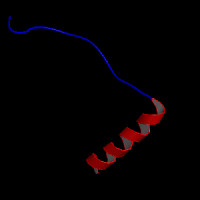
  ModBase Predicted Comparative 3D Structure on Q6IQ19
FrontTopSide
The pictures above may be empty if there is no ModBase structure for the protein. The ModBase structure frequently covers just a fragment of the protein. You may be asked to log onto ModBase the first time you click on the pictures. It is simplest after logging in to just click on the picture again to get to the specific info on that model.

-  Orthologous Genes in Other Species
  Orthologies between human, mouse, and rat are computed by taking the best BLASTP hit, and filtering out non-syntenic hits. For more distant species reciprocal-best BLASTP hits are used. Note that the absence of an ortholog in the table below may reflect incomplete annotations in the other species rather than a true absence of the orthologous gene.
MouseRatZebrafishD. melanogasterC. elegansS. cerevisiae
Genome BrowserGenome BrowserNo orthologNo orthologNo orthologNo ortholog
Gene Details     
Gene Sorter     
MGIRGD    
Protein SequenceProtein Sequence    
AlignmentAlignment    

-  Gene Ontology (GO) Annotations with Structured Vocabulary
  Molecular Function:
GO:0008017 microtubule binding

Biological Process:
GO:0007049 cell cycle
GO:0007275 multicellular organism development
GO:0045995 regulation of embryonic development
GO:0048666 neuron development
GO:0051301 cell division
GO:0060296 regulation of cilium beat frequency involved in ciliary motility
GO:1901673 regulation of mitotic spindle assembly
GO:1990755 mitotic spindle microtubule depolymerization

Cellular Component:
GO:0005737 cytoplasm
GO:0005813 centrosome
GO:0005814 centriole
GO:0005815 microtubule organizing center
GO:0005819 spindle
GO:0005856 cytoskeleton
GO:0005874 microtubule
GO:0005929 cilium
GO:0005930 axoneme
GO:0030424 axon
GO:0035869 ciliary transition zone
GO:0036064 ciliary basal body
GO:0042995 cell projection
GO:0061673 mitotic spindle astral microtubule
GO:0072686 mitotic spindle


-  Descriptions from all associated GenBank mRNAs
  LF384495 - JP 2014500723-A/191998: Polycomb-Associated Non-Coding RNAs.
MA620072 - JP 2018138019-A/191998: Polycomb-Associated Non-Coding RNAs.
BC071609 - Homo sapiens chromosome 1 open reading frame 96, mRNA (cDNA clone MGC:87639 IMAGE:5264741), complete cds.
AK098801 - Homo sapiens cDNA FLJ25935 fis, clone JTH06710.
AK094615 - Homo sapiens cDNA FLJ37296 fis, clone BRAMY2015420.
AK123465 - Homo sapiens cDNA FLJ41471 fis, clone BRTHA1000311.
BC060777 - Homo sapiens chromosome 1 open reading frame 96, mRNA (cDNA clone IMAGE:30348967), complete cds.
BC015419 - Homo sapiens chromosome 1 open reading frame 96, mRNA (cDNA clone MGC:21987 IMAGE:4396825), complete cds.
JD053148 - Sequence 34172 from Patent EP1572962.
JD346108 - Sequence 327132 from Patent EP1572962.
JD236894 - Sequence 217918 from Patent EP1572962.
JD048398 - Sequence 29422 from Patent EP1572962.
JD244970 - Sequence 225994 from Patent EP1572962.
JD448986 - Sequence 430010 from Patent EP1572962.
AK291437 - Homo sapiens cDNA FLJ77302 complete cds.
JD053584 - Sequence 34608 from Patent EP1572962.
AB590449 - Synthetic construct DNA, clone: pFN21AB9292, Homo sapiens C1orf96 gene for chromosome 1 open reading frame 96, without stop codon, in Flexi system.
LF375220 - JP 2014500723-A/182723: Polycomb-Associated Non-Coding RNAs.
MA610797 - JP 2018138019-A/182723: Polycomb-Associated Non-Coding RNAs.
LF375221 - JP 2014500723-A/182724: Polycomb-Associated Non-Coding RNAs.
MA610798 - JP 2018138019-A/182724: Polycomb-Associated Non-Coding RNAs.
BC039241 - Homo sapiens chromosome 1 open reading frame 96, mRNA (cDNA clone MGC:32857 IMAGE:4731004), complete cds.
KJ903726 - Synthetic construct Homo sapiens clone ccsbBroadEn_13120 C1orf96 gene, encodes complete protein.

-  Other Names for This Gene
  Alternate Gene Symbols: A8K5X2, C1orf96, CCSAP_HUMAN, CSAP, ENST00000284617.1, ENST00000284617.2, ENST00000284617.3, ENST00000284617.4, ENST00000284617.5, ENST00000284617.6, NM_145257, Q6IQ19, Q6P9G2, Q6ZW85, Q8IXU1, Q96BM2, uc001htl.1, uc001htl.2, uc001htl.3, uc001htl.4, uc001htl.5
UCSC ID: ENST00000284617.7
RefSeq Accession: NM_145257.5
Protein: Q6IQ19 (aka CCSAP_HUMAN)
CCDS: CCDS1577.1

-  Methods, Credits, and Use Restrictions
  Click here for details on how this gene model was made and data restrictions if any.