Human Gene ADD2 (ENST00000264436.9) from GENCODE V50
Description: adducin 2, transcript variant 1 (from RefSeq NM_001617.4)Gencode Transcript: ENST00000264436.9Gencode Gene: ENSG00000075340.25Transcript (Including UTRs) Position: hg38 chr2:70,656,784-70,768,200 Size: 111,417 Total Exon Count: 16 Strand: -Coding Region Position: hg38 chr2:70,663,425-70,706,408 Size: 42,984 Coding Exon Count: 14
Data last updated at UCSC: 2026-07-12 09:30:09
Sequence and Links to Tools and Databases
Comments and Description Text from UniProtKB
ID: ADDB_HUMAN DESCRIPTION: RecName: Full=Beta-adducin; AltName: Full=Erythrocyte adducin subunit beta;FUNCTION: Membrane-cytoskeleton-associated protein that promotes the assembly of the spectrin-actin network. Binds to calmodulin. Calmodulin binds preferentially to the beta subunit.SUBUNIT: Heterodimer of an alpha and a beta subunit.SUBCELLULAR LOCATION: Cytoplasm, cytoskeleton. Cell membrane; Peripheral membrane protein; Cytoplasmic side.TISSUE SPECIFICITY: Expressed mainly in brain, spleen, kidney cortex and medulla, and heart. Also expressed in human umbilical vein endothelial cells, human vascular smooth muscle cells, kidney tubular cells and K-562 cell line.DEVELOPMENTAL STAGE: Fetal kidney expresses isoforms 3, 4, 5, 6 and 7, and fetal liver expresses isoforms 3 and 4.DOMAIN: Each subunit is comprised of three regions: a NH2-terminal protease-resistant globular head region, a short connecting subdomain, and a protease-sensitive tail region.PTM: The N-terminus is blocked.SIMILARITY: Belongs to the aldolase class II family. Adducin subfamily.SEQUENCE CAUTION: Sequence=BAD92464.1; Type=Erroneous initiation;
Primer design for this transcript
MalaCards Disease Associations
Comparative Toxicogenomics Database (CTD)
RNA-Seq Expression Data from GTEx (53 Tissues, 570 Donors)
Microarray Expression Data
mRNA Secondary Structure of 3' and 5' UTRs
Vienna RNA Package is used to perform the secondary structure predictions and folding calculations. The estimated folding energy is in kcal/mol. The more negative the energy, the more secondary structure the RNA is likely to have.
Protein Domain and Structure Information
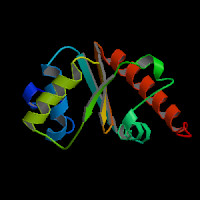
InterPro Domains: Graphical view of domain structure IPR001303 - Aldolase_II/adducin_NPfam Domains: PF00596 - Class II Aldolase and Adducin N-terminal domainModBase Predicted Comparative 3D Structure on P35612 The pictures above may be empty if there is no ModBase structure for the protein. The ModBase structure frequently covers just a fragment of the protein. You may be asked to log onto ModBase the first time you click on the pictures. It is simplest after logging in to just click on the picture again to get to the specific info on that model.
Orthologous Genes in Other Species
Orthologies between human, mouse, and rat are computed by taking the best BLASTP hit, and filtering out non-syntenic hits. For more distant species reciprocal-best BLASTP hits are used. Note that the absence of an ortholog in the table below may reflect incomplete annotations in the other species rather than a true absence of the orthologous gene.
Gene Ontology (GO) Annotations with Structured Vocabulary
Descriptions from all associated GenBank mRNAs
AK291007 - Homo sapiens cDNA FLJ76800 complete cds, highly similar to Homo sapiens adducin 2 (beta) (ADD2), transcript variant beta-1, mRNA.AF038185 - Homo sapiens clone 23700 mRNA sequence.JD527514 - Sequence 508538 from Patent EP1572962.JD309978 - Sequence 291002 from Patent EP1572962.JD501605 - Sequence 482629 from Patent EP1572962.JD167061 - Sequence 148085 from Patent EP1572962.JD279854 - Sequence 260878 from Patent EP1572962.JD271355 - Sequence 252379 from Patent EP1572962.JD550823 - Sequence 531847 from Patent EP1572962.JD483917 - Sequence 464941 from Patent EP1572962.JD417178 - Sequence 398202 from Patent EP1572962.JD380074 - Sequence 361098 from Patent EP1572962.JD121342 - Sequence 102366 from Patent EP1572962.JD123277 - Sequence 104301 from Patent EP1572962.JD214742 - Sequence 195766 from Patent EP1572962.JD559986 - Sequence 541010 from Patent EP1572962.JD305962 - Sequence 286986 from Patent EP1572962.JD256414 - Sequence 237438 from Patent EP1572962.JD242020 - Sequence 223044 from Patent EP1572962.JD338220 - Sequence 319244 from Patent EP1572962.JD516753 - Sequence 497777 from Patent EP1572962.JD279490 - Sequence 260514 from Patent EP1572962.JD187261 - Sequence 168285 from Patent EP1572962.JD310764 - Sequence 291788 from Patent EP1572962.JD285698 - Sequence 266722 from Patent EP1572962.JD079983 - Sequence 61007 from Patent EP1572962.JD505054 - Sequence 486078 from Patent EP1572962.JD346372 - Sequence 327396 from Patent EP1572962.JD311889 - Sequence 292913 from Patent EP1572962.JD554462 - Sequence 535486 from Patent EP1572962.JD256913 - Sequence 237937 from Patent EP1572962.JD172946 - Sequence 153970 from Patent EP1572962.JD191870 - Sequence 172894 from Patent EP1572962.BC008709 - Homo sapiens, Similar to adducin 2 (beta), clone IMAGE:3342912, mRNA, partial cds.BC065525 - Homo sapiens adducin 2 (beta), mRNA (cDNA clone MGC:74968 IMAGE:6142886), complete cds.JD319722 - Sequence 300746 from Patent EP1572962.JD288024 - Sequence 269048 from Patent EP1572962.JD231715 - Sequence 212739 from Patent EP1572962.JD322773 - Sequence 303797 from Patent EP1572962.JD508117 - Sequence 489141 from Patent EP1572962.JD482399 - Sequence 463423 from Patent EP1572962.JD040594 - Sequence 21618 from Patent EP1572962.JD046258 - Sequence 27282 from Patent EP1572962.JD282676 - Sequence 263700 from Patent EP1572962.JD459285 - Sequence 440309 from Patent EP1572962.JD102408 - Sequence 83432 from Patent EP1572962.JD096814 - Sequence 77838 from Patent EP1572962.JD271791 - Sequence 252815 from Patent EP1572962.JD078492 - Sequence 59516 from Patent EP1572962.JD491774 - Sequence 472798 from Patent EP1572962.JD134549 - Sequence 115573 from Patent EP1572962.X58199 - Human mRNA for beta adducin.JD163806 - Sequence 144830 from Patent EP1572962.JD253972 - Sequence 234996 from Patent EP1572962.JD391270 - Sequence 372294 from Patent EP1572962.JD418762 - Sequence 399786 from Patent EP1572962.JD165511 - Sequence 146535 from Patent EP1572962.JD394296 - Sequence 375320 from Patent EP1572962.JD531304 - Sequence 512328 from Patent EP1572962.JD087812 - Sequence 68836 from Patent EP1572962.U43959 - Human beta 4 adducin mRNA, alternatively spliced partial cds.KJ896380 - Synthetic construct Homo sapiens clone ccsbBroadEn_05774 ADD2 gene, encodes complete protein.AB590530 - Synthetic construct DNA, clone: pFN21AE2067, Homo sapiens ADD2 gene for adducin 2, without stop codon, in Flexi system.BC011416 - Homo sapiens adducin 2 (beta), mRNA (cDNA clone IMAGE:3875231), with apparent retained intron.BC010237 - Homo sapiens adducin 2 (beta), mRNA (cDNA clone IMAGE:4153471), partial cds.BC056881 - Homo sapiens adducin 2 (beta), mRNA (cDNA clone IMAGE:6139987), partial cds.BC051882 - Homo sapiens adducin 2 (beta), mRNA (cDNA clone IMAGE:6142945), partial cds.BC041666 - Homo sapiens adducin 2 (beta), mRNA (cDNA clone MGC:47622 IMAGE:5491324), complete cds.JD119777 - Sequence 100801 from Patent EP1572962.JD343231 - Sequence 324255 from Patent EP1572962.JD545659 - Sequence 526683 from Patent EP1572962.JD218986 - Sequence 200010 from Patent EP1572962.DQ570990 - Homo sapiens piRNA piR-31102, complete sequence.JD309366 - Sequence 290390 from Patent EP1572962.JD058635 - Sequence 39659 from Patent EP1572962.JD073948 - Sequence 54972 from Patent EP1572962.AF486421 - Homo sapiens beta adducin 2 transcript variant beta-4b (ADD2) mRNA, partial cds; alternatively spliced.AF486422 - Homo sapiens beta adducin 2 transcript variant beta-4c (ADD2) mRNA, partial cds; alternatively spliced.AF486423 - Homo sapiens beta adducin 2 transcript variant beta-4d (ADD2) mRNA, partial cds; alternatively spliced.AF486420 - Homo sapiens beta adducin 2 transcript variant beta-4a (ADD2) mRNA, partial cds; alternatively spliced.AB593080 - Homo sapiens ADD2 mRNA for beta-adducin, complete cds, clone: HP05506-RBb16F05.BC027876 - Homo sapiens cDNA clone IMAGE:5207443, containing frame-shift errors.AB209227 - Homo sapiens mRNA for adducin 2 isoform b variant protein.AK297250 - Homo sapiens cDNA FLJ61313 complete cds, highly similar to Beta-adducin.AK309773 - Homo sapiens cDNA, FLJ99814.DQ576983 - Homo sapiens piRNA piR-45095, complete sequence.JD277984 - Sequence 259008 from Patent EP1572962.JD077576 - Sequence 58600 from Patent EP1572962.JD218248 - Sequence 199272 from Patent EP1572962.JD336605 - Sequence 317629 from Patent EP1572962.JD055006 - Sequence 36030 from Patent EP1572962.
Biochemical and Signaling Pathways
Other Names for This Gene
Alternate Gene Symbols: A8K4P2, ADDB, ADDB_HUMAN, B4DM17, D6W5G7, D6W5G8, ENST00000264436.1, ENST00000264436.2, ENST00000264436.3, ENST00000264436.4, ENST00000264436.5, ENST00000264436.6, ENST00000264436.7, ENST00000264436.8, NM_001617, P35612, Q13482, Q16412, Q59G82, Q5U5P4, Q6P0P2, Q6PGQ4, Q7Z688, Q7Z689, Q7Z690, Q7Z691, uc002sgz.1, uc002sgz.2, uc002sgz.3, uc002sgz.4, uc002sgz.5UCSC ID: ENST00000264436.9RefSeq Accession: NM_001617.4 Protein: P35612
(aka ADDB_HUMAN)CCDS: CCDS1906.1
Methods, Credits, and Use Restrictions
Click here
for details on how this gene model was made and data restrictions if any.
 Sequence and Links to Tools and Databases

 Microarray Expression Data